AWD Isn't a Badge, It's a Bill: Checking a Used SUV's Four-Wheel Drive Before Winter
November is when the used SUV market gets optimistic. Every other motor on the forecourt suddenly has “winter-ready” in the advert, a set of chunky tyres and a badge on the boot that promises to drag you out of a flooded car park in the Cotswolds. The trouble is that a badge is not a drivetrain. Plenty of used SUVs are front-wheel drive only, and plenty more have a rear axle that stopped doing anything useful several owners ago.
At BTC Motors, we like AWD. We also like buyers knowing what they are paying for. So here is the routine we would use on a used SUV before handing over money in winter 2026 — no heroics, no muddy lane theatrics, just the checks that separate a proper four-wheel-drive car from a sticker and a dream.
Start with the VIN, not the sticker
First job: prove the car is actually AWD. Some models sold as “4x4” or “Allroad” or “4Motion” in the advert are front-drive in base trim, and a previous owner can fit a badge in five minutes. Check the VIN against a build-sheet decoder, or ask the seller for the original spec. Then get underneath. You are looking for a propshaft running to the rear, a rear differential, and driveshafts going out to the rear hubs. No propshaft, no party.
This matters because AWD cars carry a price premium. If you pay it for a two-wheel-drive crossover with plastic wheel arch extensions, that is not a bargain. That is a donation.
Warning lights are only the opening scene
A used car can wear every off-road sticker in Halfords and still have a dead Haldex pump. On the test drive, watch for “4WD system fault”, “AWD disabled”, traction control lights that stay on, or an ABS lamp that never goes out. Some sellers clear codes before a viewing, so a clean dash is not proof of health.
If you can, plug in a scan tool and check pending codes as well as live data. On a Haldex car, look for pump operation and clutch engagement. On an older viscous or mechanical system, a road test may be the only clue. At the very least, make sure the warning bulbs actually illuminate when you turn the key — a missing ABS light is not a feature, it is a red flag.
Tyres: the cheapest way to kill an AWD system
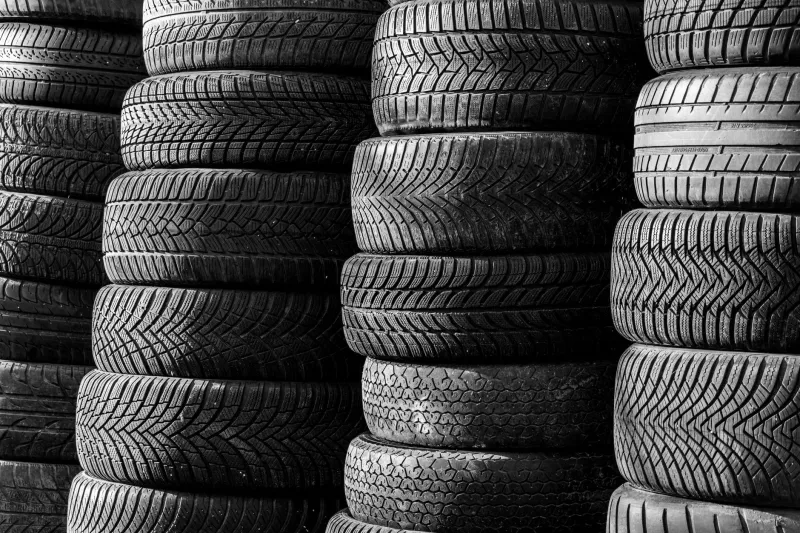
This is the bit most buyers skip, and it is the bit that costs them. AWD systems — especially Haldex and viscous couplings — do not enjoy running with mismatched tyre circumferences. If one tyre is new, one is half-worn and the other two are from a different brand, the system can spend its life thinking the car is permanently slipping. That wears the clutch pack, overheats the pump and turns a £200 tyre problem into a four-figure drivetrain bill.
Check tread depth across all four tyres, not just the outer edge. Look for matching brands and models on the same axle, ideally across the car. Check pressures when cold. Uneven wear can point to alignment, a tired diff or a suspension problem. If the tyres are mismatched, price a full set into the deal. A matching set of decent tyres is cheaper than a rear differential.
Paperwork is the real AWD service history
A full engine service history is nice. It tells you almost nothing about the AWD system. You want evidence of the fluids that keep the rear axle alive: Haldex oil and filter, rear diff oil, transfer box oil, and the gearbox oil if it is due. Intervals vary by model — Haldex units often want attention around 30,000 to 40,000 miles or every few years, depending on the generation — so check the schedule for that specific car.
Look for invoices that mention “Haldex service”, “diff oil”, “transfer box oil” or “4WD service”. If the seller says it is “sealed for life”, ask which life. Because it is usually the life of the first owner, not yours. A car with no AWD paperwork is not automatically a write-off, but it is a negotiation point. Assume the service is overdue and price it in.
The low-speed traction check
You do not need a pay-and-play site to test AWD. Find a safe private surface — gravel, wet grass, an empty car park with permission — and do everything slowly. On full lock at walking pace, apply gentle throttle. Listen for clunks, whines or a rear wheel scrabbling for grip. On a loose surface, a front-drive car will spin the front wheels and drag the rear; a working AWD car should pull from all four corners without drama.
Do the same in reverse on lock. If you feel a shudder through the wheel or hear a metallic graunch, walk away. That is transfer box or rear diff territory, and it is not a cheap argument to win after purchase. Never do this on a public road, and never let a seller pressure you into “giving it some” to prove it works. A proper AWD check is boring. Boring is good.
What the repairs actually cost
Prices vary by model and labour rate, but here is the blunt reality for common AWD faults:
- Haldex pump replacement: roughly £350–£650 fitted.
- Haldex oil and filter service: roughly £150–£250.
- Propshaft replacement: roughly £500–£900.
- Rear differential (used or recon): roughly £800–£1,500.
- Transfer box: roughly £700–£1,500.
- A matching set of four tyres: roughly £400–£800.
That is before you get into diagnostic time, seized bolts and the usual “while we are in there” discoveries. A £1,000 discount on the asking price can disappear very quickly.
The walk-away rules
No AWD service evidence plus mismatched tyres? Walk, or negotiate hard. A warning light that “just needs a sensor”? Scan it before you believe it. A clunk on full lock? Walk. A seller who refuses a slow, safe traction check? Walk. There are other SUVs.
AWD is a maintenance commitment, not a badge. Buy the one with matching rubber, proper paperwork and a rear axle that actually does something. Otherwise you have bought a heavy, thirsty front-wheel-drive car with a lie on the boot.