The £600 Question: Why the Cheapest Car Is Often the One Already on Your Drive
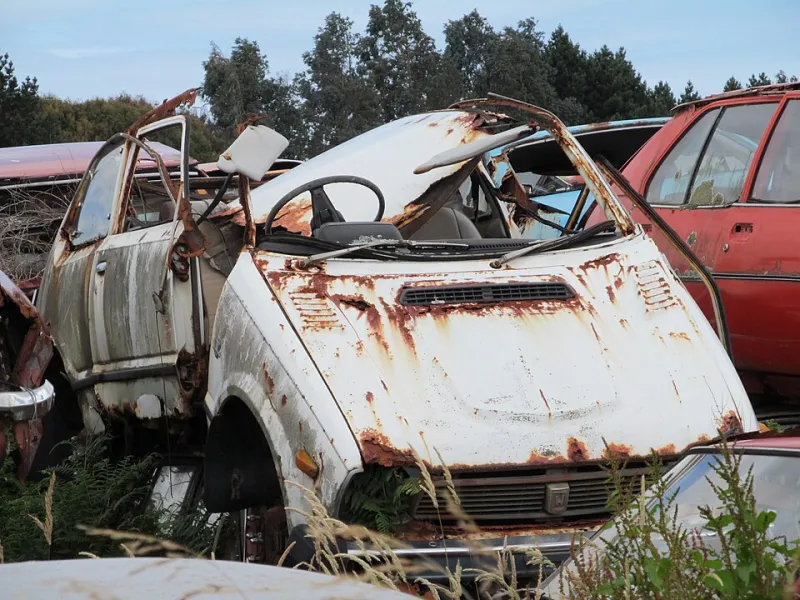
Photo: Riley from Christchurch, New Zealand, CC BY 2.0, via Wikimedia Commons
Start with the bill, not the badge
A £600 invoice lands and the instinct is immediate: that is nearly a deposit on something newer. But a deposit is not the cost of a car. The monthly payment is not the cost of a car either. The cost is everything that leaves your account over the next two or three years — finance, insurance, servicing, tyres, fuel, road tax and the quiet, brutal drip of depreciation.
In 2026, plenty of drivers are paying £250 to £350 a month for a car that does the same job as the one already sitting on the driveway. That is £3,000 to £4,200 a year before anyone has checked the tyres. Against that, a one-off £600 repair on a structurally sound car is not a disaster. It is a bargain — provided you are honest about why the bill has arrived and what is coming next.
The repair-or-replace decision should be financial logic, not sentiment. You do not keep a car because you have owned it for years. You keep it because the next 12 months of known costs are lower and more predictable than the next 12 months of replacement costs. Sometimes that is true. Sometimes it is pure wishful thinking.
Rust is the red line
Mechanical bits bolt on and off. Rust does not. That is the first fork in the road.
Surface rust on a wheel arch is a cosmetic annoyance. Structural corrosion in sills, jacking points, subframe mounts, suspension turrets or the floor is a different language. If an MOT advisory mentions corrosion 'within a prescribed area', or a tester has had to use a screwdriver to make a point, you need a proper look before you spend £600 on a clutch. Welding can be done well, but it is labour-intensive, and once rot is in one place it is often lurking somewhere else.
A car with a solid shell and a tired engine is a candidate for repair. A car with a sound engine and a crumbling structure is a money pit wearing a nice set of alloys. If the rust is structural and widespread, the £600 bill is not the decision — the bodyshop quote is.
MOT advisories are a forecast, not a verdict
The MOT file is the closest thing a used car has to a medical history. A clean pass with no advisories on an older car is genuinely encouraging. A pass with five advisories is a to-do list with a deadline.
Read them properly. A slightly worn tyre or a corroded brake pipe is one thing. A list that includes suspension arms, corroded sills, an oil leak and a binding brake is telling you the car has been maintained on hope. That does not mean scrap it. It means the £600 bill is probably the first of three.
The trick is to separate a one-off failure from a pattern. A clutch at 90,000 miles is a wear item doing its job. A clutch at 45,000 miles on a car that has also needed a flywheel, a slave cylinder and a gearbox mount is a symptom. Pay for the pattern, not just the part.
Parts availability is the hidden tax
A common hatchback from a volume brand is cheap to keep alive because the aftermarket is stuffed with parts. A rare coupe, an imported oddity or a ageing premium car with complicated electronics is a different proposition. The part might exist, but it might be main-dealer-only, second-hand-only or simply no longer made.
Before authorising a big repair, ask what else is likely to fail in the next two years and whether those parts are available at sensible money. A £600 bill on a car with cheap, plentiful components is manageable. The same bill on a car where a headlight unit costs £700 and a used one is like hens' teeth is the start of a bad relationship.
This is where a good independent garage earns its keep. A workshop that knows the model can tell you which failures are common, which are coming, and whether the repair is a sensible investment or a sticking plaster.
Do the annual cost maths
Get a piece of paper out. Add up the repair, the next service, the MOT, the road tax, the insurance renewal, a set of tyres and a realistic fuel figure for your mileage. Divide by the miles you actually do. That is your cost per mile for another year of the car you know.
Now do the same for the replacement. Include the deposit, the monthly payment, the likely higher insurance, the first service, the tyres it will need and the depreciation. Most people forget depreciation because it never appears on a monthly statement. It is still real.
A £600 repair on a £1,500 car can look mad on paper. But if the car is solid and the rest of the year is predictable, it is often cheaper than signing up to £3,000 of payments on a car you have not yet met. Market value matters when you sell. It matters much less when you plan to keep.
When to cut losses
The hard cases are not about the size of one bill. They are about the direction of travel.
Cut losses when the structure is rotten, when the car has repeated electrical faults nobody can trace, when parts are unavailable at sensible money, or when the next MOT is likely to produce a list longer than your arm. Cut losses when every month brings a new warning light and you have stopped trusting the car for long journeys. Cut losses when the repair bill is affordable but the car is not safe, not reliable and not worth the stress.
Do not cut losses just because the car is old, the paint is flat or the neighbours have something newer. Age is not a fault code.
The verdict
A £600 bill is cheaper than a new car when the shell is sound, the bill is a one-off, parts are available and the next MOT looks survivable. It is throwing good money after bad when the rust is structural, the faults are repeating and the car is becoming a subscription to your local garage.
The cheapest car is often the one already on your drive — but only if the structure is solid and the bills are predictable. Do the maths, ignore the badge and decide with your head, not your heart.