The Cheapest Lie Detector on the Forecourt Is Made of Rubber
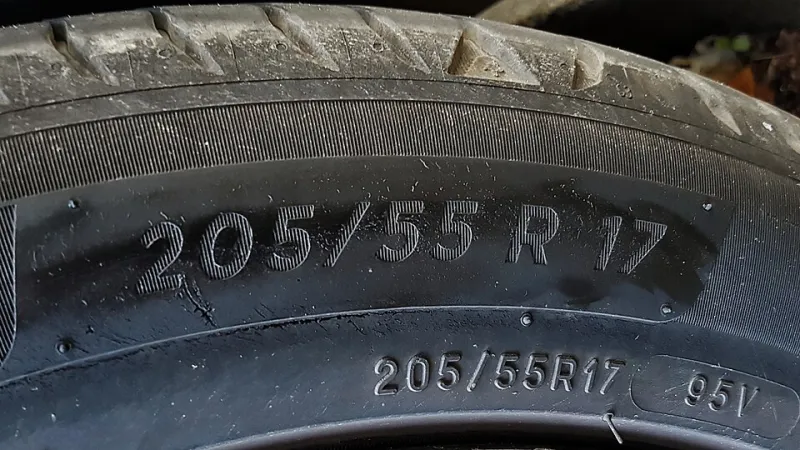
Photo: Acabashi, CC BY-SA 4.0, via Wikimedia Commons
A used car can be cleaned, polished and dressed to within an inch of its life. Fresh mats, a pine-scented air freshener and a dashboard so shiny it blinds you on the test drive. None of that tells you much. The tyres, though, are a different story. They are the cheapest visible clue to how a car has been treated, and they are sitting right there in the advert photos if you know what to look for.
At BTC Motors we see this every week: a car that looks tidy until you crouch down and read the rubber. Here is the forecourt tyre audit we would run before parting with cash.
Start With the Four-Digit Date Code
Every tyre has a DOT code on the sidewall, and the last four digits are the date of manufacture. The first two are the week, the second two are the year. So 3221 means the 32nd week of 2021. Simple enough.
What matters is the spread. Four tyres from the same year suggests a owner who replaced them as a set and kept things consistent. A mixture of dates – say, one from 2019, two from 2022 and one from last year – tells you replacements have been done piecemeal. That is not automatically a disaster, but it is worth asking why.
Age matters as much as tread. Rubber hardens and cracks with time, even if the car has barely moved. Many tyre makers suggest inspection from around five years and replacement by ten, regardless of tread depth. A car sitting on original rubber from 2014 is not a bargain; it is a set of four pending bills. Look for fine cracks in the tread grooves and sidewalls, often called crazing. If the rubber looks like old boot leather, budget for new tyres.
One quirk: the date code is often only on the outer sidewall. On directional tyres, or if wheels have been swapped, you may need to check the inner face. Get on your hands and knees. It is worth it.
Matching Brands Are a Clue, Not a Rule
Four matching premium tyres on a well-kept car is a good sign. It suggests someone was prepared to spend money on the bits that actually touch the road. Four mismatched budgets on a car that has just been 'fully prepared' is a warning light.
Matching across an axle is the important bit. Different makes left and right can affect grip balance, especially in the wet. Different sizes or profiles across an axle is worse – that is not a styling choice, it is a safety issue and an MOT waiting to happen. Check the size markings on all four and make sure they match the handbook or the tyre pressure sticker.
A spacesaver spare is fine if it is a spacesaver. But if one wheel is a odd size with a budget tyre and the seller shrugs, ask questions. Cars that have been run on a tight budget often show it here first.
Read the Wear Pattern Like a Receipt
Tread depth is the headline, but the pattern is the story. A tread gauge is a couple of quid and fits in your pocket. Legal minimum is 1.6mm across the central three-quarters of the tread, but for UK weather we would want considerably more than that. Anything under 3mm is going to feel sketchy on a wet B-road.
Now look at how it has worn:
- Inner edge worn – often alignment, camber or worn suspension components. A car that has been kerbed hard or has tired bushes can chew the inside shoulder while the rest of the tyre looks fine.
- Outer edge worn – kerbing, hard cornering or a lot of tight multi-storey car park action. Not always abuse, but it tells you the car has had a busy life.
- Centre worn – overinflation. Cheap to fix, but a sign of neglect.
- Both edges worn – underinflation. Also a sign that nobody has checked pressures in a while.
- Cupping or scalloping – often dampers or suspension bushes. This is the expensive one. New tyres will not fix it; they will just wear the same way.
A car with evenly worn, matching rubber has probably been looked after. A car with feathering on the edges and a story about 'motorway miles' is telling you something different.
Sidewalls: The Damage Buyers Miss
The sidewall is where the real nasties hide. A bulge is internal cord damage – usually from a pothole or kerb strike – and it is an MOT fail and a blowout risk. Walk away. Cuts that expose the cords are the same story. Kerb rash on the alloy is cosmetic; a gouge in the rubber is not.
Check the inner sidewalls too, especially on the front. It is easy to miss a cut on the inside face when you are buying in a hurry. And be wary of sidewall repairs. A proper repair is a patch or plug-patch from the inside of the tread area. A plug shoved into a sidewall is a bodge, full stop. It should not be there.
Budget Rubber and the False Economy
We are not tyre snobs. A decent mid-range tyre is often plenty for a normal UK commute. But there is a difference between mid-range and the unbranded 'ditchfinders' that appear on cheap part-worns. Wet braking distances can vary by several car lengths between a premium tyre and a budget one. That is the gap between stopping and not stopping.
If the seller has just fitted four shiny new tyres before sale, ask what they are and check the date code. It could be genuine preparation. It could also be a set of the cheapest rubber available to make the car look ready. Either way, you should know what you are standing on.
The Bottom Line
A tyre audit takes ten minutes with a torch and a tread gauge. It will not tell you everything about a used car, but it will tell you plenty about the owner. Tired, mismatched, cracked or unevenly worn rubber is the car equivalent of a bad reference. You can ignore it, but it rarely gets better after you hand over the money.
If the tyres look like they have had a hard life, assume the rest of the car has too. Price accordingly, or walk. There is always another car – and hopefully one with four matching tyres and a date code from this decade.