Your Diesel's Worst Enemy Isn't Mileage — It's the School Run
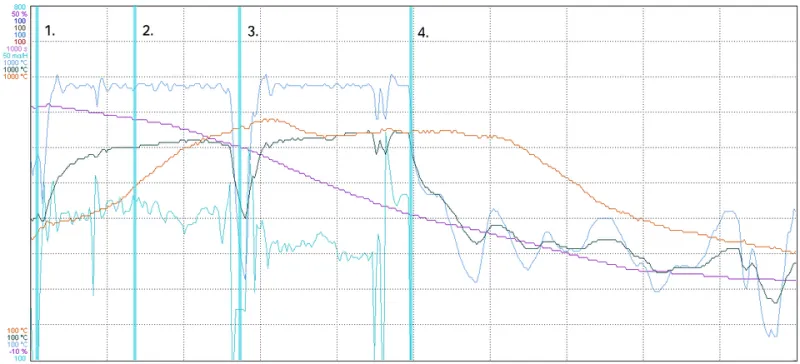
Photo: Diesel_particulate_filter.png: DooMMeeR derivative work: 1-1111 (talk), CC BY-SA 3.0, via Wikimedia Commons
Walk round any UK forecourt and you'll find them: tidy, low-mileage diesels at tempting money. The seller says it's been looked after, the MOT is clean and the dash is free of warnings. Then you find out the previous owner did 8,000 miles a year in ten-minute bursts — school, supermarket, gym, home. That's not a cosseted diesel. That's a diesel quietly banking a four-figure bill.
Short trips are the hard miles
A diesel particulate filter needs heat to burn off soot. On a motorway run the exhaust gets hot enough for passive regeneration — soot turns to ash and gets pushed out. On the school run, the engine barely gets warm before it's switched off. The DPF fills up, the car attempts an active regeneration, and the journey ends before it finishes. Do that five days a week and the filter is always playing catch-up.
This is why a 90,000-mile motorway diesel can be healthier than a 40,000-mile town car. Mileage tells you how far it's been. It doesn't tell you how hard the DPF has been working.
The dash light is the last warning, not the first
By the time the DPF warning appears, the car has usually been trying to sort itself out for a while. Sometimes a forced regeneration at the workshop will clear it. Sometimes the filter is already too loaded, or the ash level is too high, and no amount of software persuasion will save it. A replacement DPF on a typical UK family diesel can easily run past £1,000 fitted, and that's before you deal with whatever caused the blockage in the first place.
So don't treat the warning light as the start of the conversation. Treat it as the end of one.
What a mechanic should actually read
A generic fault-code reader will tell you there's a DPF issue. It won't tell you whether the filter is merely soot-loaded or genuinely worn out. A proper check looks at live data and history:
- Regeneration history. How often has it regenerated, how long since the last successful one, and how many have been aborted? A car that keeps starting regens and never finishing them is telling you something.
- Soot mass and ash mass. Soot can be burned off. Ash cannot. High ash mass means the filter is nearing the end of its life, no matter what the mileage says.
- Differential pressure. Measured at idle and raised rpm, this shows how hard the exhaust is having to push through the filter. High backpressure is a blocked filter, not a driving-style problem.
- Oil level and dilution. Short-trip diesels often dump unburnt diesel into the sump during repeated regens. If the oil level has risen or smells of fuel, the engine oil is doing less protecting than it should.
- EGR and intake condition. A sooted-up EGR system makes everything worse and is often part of the same short-trip story.
Ask for the scan report, not just a verbal 'it's all clear'. If a seller can't provide one, factor that into the price.
The bottle of cleaner is a confession
DPF additives and 'cleaners' have their place, but they are not a cure for a filter that's been fed a diet of cold starts. If the advert says 'DPF recently cleaned' or 'just had a bottle through it', ask for the invoice. If there isn't one, assume the car has been treated to a temporary fix rather than a proper diagnosis.
Be just as wary of a diesel that has been 'mapped out' or had the DPF removed. That's an MOT fail and, on a road car, illegal. It also means the engine has been run with a filter that wasn't doing its job, and the soot has gone somewhere else — usually the oil, the EGR or the turbo.
A genuinely sorted car will have evidence: diagnostic printouts, a forced regen if needed, and a reason why the filter loaded up in the first place.
Buying a used diesel for mostly short trips
Be honest about your own driving. If most of your journeys are under ten miles and the car rarely sees a dual carriageway, a modern diesel is the wrong tool. A petrol or hybrid will usually be cheaper to own and far less temperamental.
If you still want a diesel, buy on evidence. Look for a service history that shows regular oil changes with the correct low-SAPS oil, not just annual stamps. Check the oil level before and after a test drive. Get a pre-purchase scan that reads DPF data, not just fault codes. And take it for a proper run — not round the block, but a good twenty minutes at speed so you can see whether it behaves when hot.
Why the motorway run isn't a repair
You'll hear it every time: 'Just take it for a good run.' It's not bad advice as a habit. A hot, sustained run can let a healthy DPF do its job. But it is not a repair strategy. It won't remove ash. It won't fix a cracked filter or a failed sensor. And if the filter is already heavily loaded, a hard run can trigger a regeneration that finishes badly or dumps more diesel into the oil.
A motorway blast is maintenance, not a cure. If the differential pressure is high and the ash mass is up, no amount of M6 will save you.
Bottom line
A used diesel can be a brilliant buy — but only if it's been used properly. Short-trip school-run cars are the ones that arrive at the workshop with a DPF warning, a rising oil level and an owner who swears it's never missed a service. Check the regen history, read the pressures, look at the oil, and walk away from the bottle-of-cleaner fixes. The bill you avoid is the one you don't have to explain to anyone.